Reader Notes
What to expect from Maelana’s books, and how she writes them. Every statement here is in her own words.
Spice scale
How much heat to expect, from a few open-door scenes to full group chaos.
Full group chaos, very non-vanilla spice, blood/weapon play
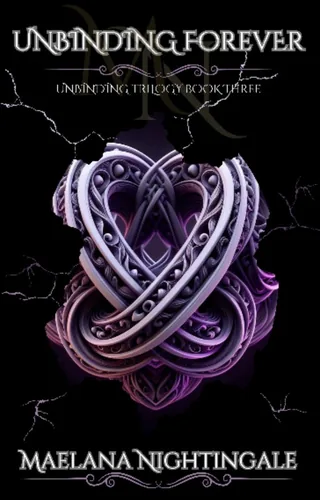
Non-vanilla, kink-positive spice, group scenes
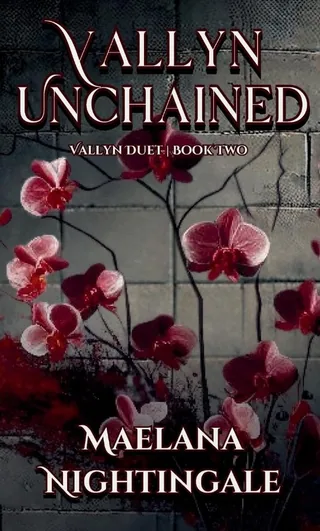
Not group, but kink-positive & graphically descriptive
Open-door scenes with less graphic language
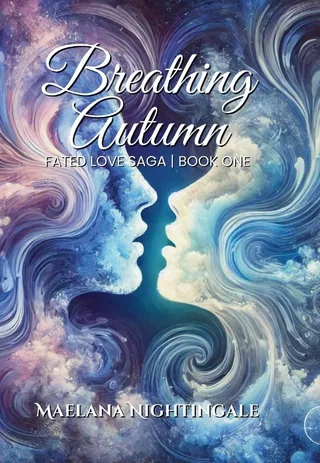
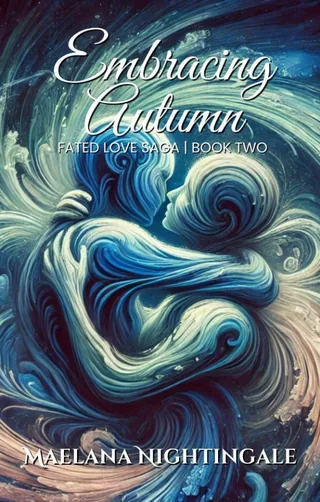
Open-door, but only a few scenes, and less graphic language
Dark content scale
How dark the themes get, from medical scenes and alcohol to on-page graphic violence. Each book page lists its full content warnings.
On-page graphic violence and/or SA
Death, violence, SI or self-harm, stalking, attempted SA
Rough, non-vanilla spice, dubcon, blood/weapon play
Non-vanilla spice, group scenes
Alcohol/drug use, medical TWs, accidents
Narrative intimacy scale
I write on a spectrum of narrative intimacy.
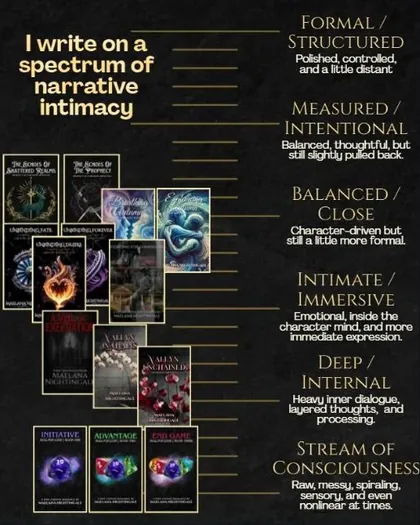
- Formal / StructuredPolished, controlled, and a little distant
- Measured / IntentionalBalanced, thoughtful, but still slightly pulled back.
- Balanced / CloseCharacter-driven but still a little more formal.
- Intimate / ImmersiveEmotional, inside the character mind, and more immediate expression.
- Deep / InternalHeavy inner dialogue, layered thoughts, and processing.
- Stream of ConsciousnessRaw, messy, spiraling, sensory, and even nonlinear at times.
Not all of my books are going to hit the same for every reader. That’s intentional and by design.
Some of my stories lean more structured and distant in their voice. I’ve seen reviews call them “too clinical.”
Others live deep inside a character’s head. I’ve seen those reviews say “too much inner dialogue,” “too long,” or “repetitive.”
In multiple POV books, the writing style changes between characters. It’s one of the ways I give them distinct voices.
Here’s the thing… In reality, there are people who mentally process both ways. And sometimes they spiral, ruminate, or talk things to death in their own minds, trying to make sense of what they’re feeling.
Real people repeat things and even use filler words in both what they say out loud and their inner dialogues.
None of this is accidental in my writing. For some readers, that kind of internal processing will feel very familiar.
I don’t write every story with the same voice, pacing, or level of spice. So if you read across my books, you’re going to get different experiences.
Which means you might love one of my books and not connect with another. And that’s honestly okay. Every story is written the way I meant it to be.
Content warnings & author’s notes
Every book’s full content warnings and author’s note, in Maelana’s words. Read them all on one page, or open a book.
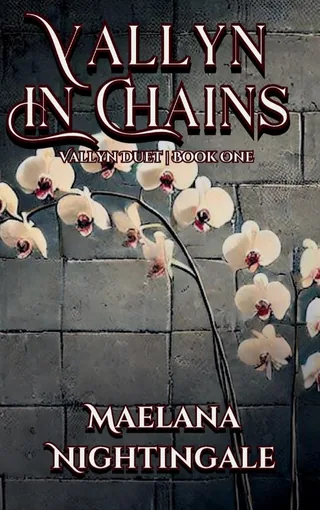
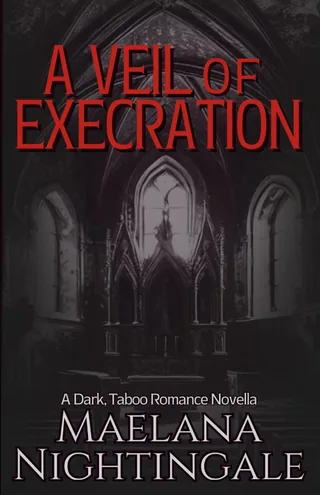
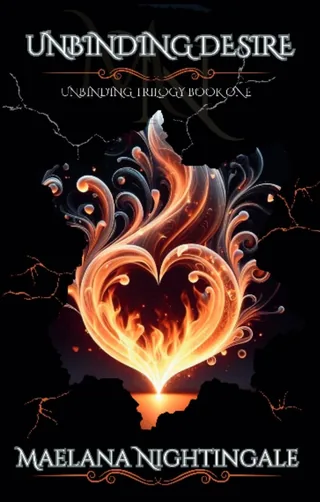
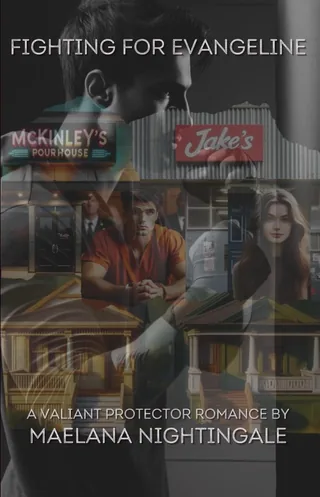
On-page consent, birth control & STI protection
As an erotica author, I believe it is my responsibility to clearly depict explicit consent on the page, even in scenes involving CNC (Consensual Non-Consent) and dubcon (Dubious Consent). It’s equally important to portray characters who are responsible in their choices. While I often place my characters in situations where barrier protection isn’t necessary, I still make sure they discuss it, trusting one another to be honest.
The one exception is my fantasy (The Prophecy of Vyrdanor and The Wild Hunt): there is no discussion of barrier protection or birth control, but there is still very explicit consent.
Incorporating these essential elements can sometimes be challenging without disrupting the flow of the story, but I make it a priority because it’s the ethical approach to writing erotic literature.
BDSM & Dominant/submissive dynamics
In my work, BDSM and Dominant/submissive dynamics are aimed to be portrayed authentically, reflecting the unique personalities and relationships of the characters in my stories. In the real world, these dynamics vary widely and are lived and experienced across a broad spectrum. Within my work there is no intent to generalize or stereotype anyone who lives in and/or practices these dynamics.
It is also important to remember that all aspects of BDSM can be practiced outside of a D/s dynamic.
Terminology, information & myths surrounding D/s dynamics & BDSM
General terminology, benefits, types of submissives and Dominants, myths & FAQs, and contracts.
Read the guideStatement on generative & assistive AI
I believe readers deserve transparency, so I want to be clear about my approach to AI and the creative process behind my books. I also believe the Author's Guild guidance on AI is best practice. You can learn what that is here (the Authors Guild’s AI best practices for authors).
Outside of my author career, I've spent years working in corporate healthcare leadership, where I've watched generative AI become increasingly integrated into everyday business operations. My professional experience has included using AI-assisted technologies for research, technical documentation, training materials, and other administrative responsibilities.
I recognize that these technologies are becoming part of the infrastructure we use to operate businesses, build websites, manage communications, and navigate the modern world. I believe there is a meaningful distinction between using technology to support operational tasks and using generative AI to replace human creativity.
My approach to fiction writing is very different.
I do not use generative AI to write my books. Every story begins with a spiraling mind full of ideas and words that have to get on the page, and every one of those stories is written by me.
Like many authors, I selectively use assistive tools such as Grammarly and AutoCrit to help identify grammar issues, spelling errors, readability concerns, and repeated words or phrases. Among other features, I do not use Grammarly's generative writing features or AutoCrit's AI-powered "beta reader" functions. I use these platforms only for their basic editing, analysis, and proofreading capabilities.
I also use technology and search engines to assist with factual research. As AI-generated summaries and other AI-powered features have become increasingly integrated into modern search engines, it is difficult to avoid encountering them entirely during the research process. However, I do not intentionally seek out or use AI for research.
I am also concerned about the growing use of AI to replace human creativity. Art is part of what separates humans from the rest of the beating hearts on this planet. Authors, artists, musicians, editors, narrators, photographers, and countless other creatives deserve recognition and compensation for their work. I will continue to choose human creativity over automation.
All of my book covers are designed by me, often with ideas, feedback, artistic contributions, photography, and support from family members and other contributors who prefer to remain private.
My cover designs may incorporate licensed stock photography, illustrations, and other visual assets. I make intentional efforts to select human-created imagery and avoid knowingly incorporating generative AI artwork into my cover designs.
However, I recognize that stock photography and digital asset marketplaces have increasingly incorporated AI-generated content, and identifying its origins is not always straightforward. While I review available licensing information, creator disclosures, and platform labeling when selecting assets, I cannot independently verify the creation process behind every image offered by a third-party provider.
I believe in supporting human photographers, illustrators, graphic designers, and other creative professionals. My commitment is to make reasonable, good-faith efforts to source human-created artwork, respect licensing requirements, and avoid knowingly using generative AI imagery in my book covers.
If credible information comes to light indicating that an asset I've used was misrepresented as human-created, I will review the circumstances and take appropriate action where reasonably possible.
I have worked with professional editors and proofreaders throughout my publishing journey, including individuals who have requested not to be publicly credited. I respect those wishes.
I make reasonable efforts to vet the tools, services, creative assets, and professionals involved in producing and promoting my books. This includes stock photography, graphic resources, music, editors, artists, narrators, and other creative contributors.
My priority is ensuring that the creative work I publish and the artistic materials I intentionally select reflect human creativity rather than generative AI replacing the work of human artists.
I also recognize that modern publishing and business operations rely on technology that increasingly incorporates AI-assisted features. These may include website development, administrative software, scheduling systems, and other technical infrastructure. I do not consider the use of these tools inherently equivalent to generating fiction, artwork, or other creative content.
I cannot guarantee that every platform or service provider I use operates without generative AI. What I can promise is that I will continue making informed decisions, maintaining human creative control, and being transparent about my own practices.
I also believe there is an important distinction between holding myself accountable and policing others. My responsibility is to be transparent about my own work. I will continue making thoughtful decisions about the books I write, the assets I use, the collaborations I accept, and the content that appears in spaces I control.
Beyond that, each creator is responsible for their own work and their own disclosures. I do not intend to police other authors, artists, vendors, readers, reviewers, ARC team members, or street team members. Healthy discussions about AI are important, but so are honesty, transparency, and good faith. I hope we can continue having those conversations while remembering that assumptions and false accusations can have real and lasting consequences for the people on the receiving end.
To provide additional transparency, I have begun documenting more of my creative process through Grammarly Authorship reports for shorter stories, hyperlapse videos, livestream writing sessions, behind-the-scenes content, and other forms of process documentation. I also plan to continue expanding those efforts moving forward. No author should need to go to these lengths; however, I believe transparency is important for me, personally.
In addition, my books are being enrolled in the Authors Guild's Human Authored registration program. While participation relies on author honesty—as many aspects of publishing do—it is not something I take lightly. Misrepresenting a work with the Human Authored trademark can carry significant legal and professional consequences, including issues related to trademark infringement and consumer protection laws, including consumer fraud.
As conversations surrounding AI have become more common, so have accusations. While healthy discussion and good-faith questions are important, I also believe it is important to remember that false accusations can cause real harm to authors, artists, and other creative professionals. Reputations, careers, and livelihoods can be affected by claims that are presented as fact without evidence.
My commitment is simple—the stories I publish have always been and always will be written by me. My characters, their worlds, their voices, and the stories they tell come from my imagination and my work.
I believe human creativity is worth protecting. I will continue prioritizing human authorship and artistry in my books and their creative presentation, while acknowledging that the technologies supporting an independent publishing business are constantly evolving.
Technology may help me run my business, but it does not replace the human heart behind my stories.
Thank you for trusting me with your reading time and for supporting human creativity.
♥ Maelana Nightingale
Community values
The worlds I create and the communities I build are intended to be welcoming spaces for people from many different backgrounds, identities, relationship structures, beliefs, and lived experiences.
As an author, I strive to create spaces where LGBTQIA+ individuals, ethically non-monogamous people, members of the BDSM community, neurodivergent individuals, people with disabilities, and other often marginalized groups feel welcome, respected, and valued.
That does not mean I am perfect.
Representation is an ongoing journey, and I am constantly learning. When I make mistakes, I believe in listening, learning, and doing better. Growth requires humility, and I am committed to continuing that work.
Many of the communities represented in my books and online spaces are not simply topics I research—they are communities I know through personal experience, friendships, and relationships. Even so, no single person can speak for an entire community, and my experiences are not universal. Communities are diverse, and identities, experiences, and perspectives exist on a spectrum.
Discrimination, harassment, hate speech, bullying, or attacks based on identity, orientation, gender, relationship structure, disability, race, religion, or other protected characteristics are not welcome in my spaces.
I believe stories have the power to build empathy, broaden perspectives, and remind us of our shared humanity. My hope is that people who gather in spaces I host will extend one another the same respect, kindness, and grace they would hope to receive themselves.